Why we exist

He can't tell you what's wrong.

George is a real dog. His owner co-founded this company and has worked as a veterinary technician — and she still could not always tell what was wrong with him. Everything we built came out of that.

Chapter One

This is George

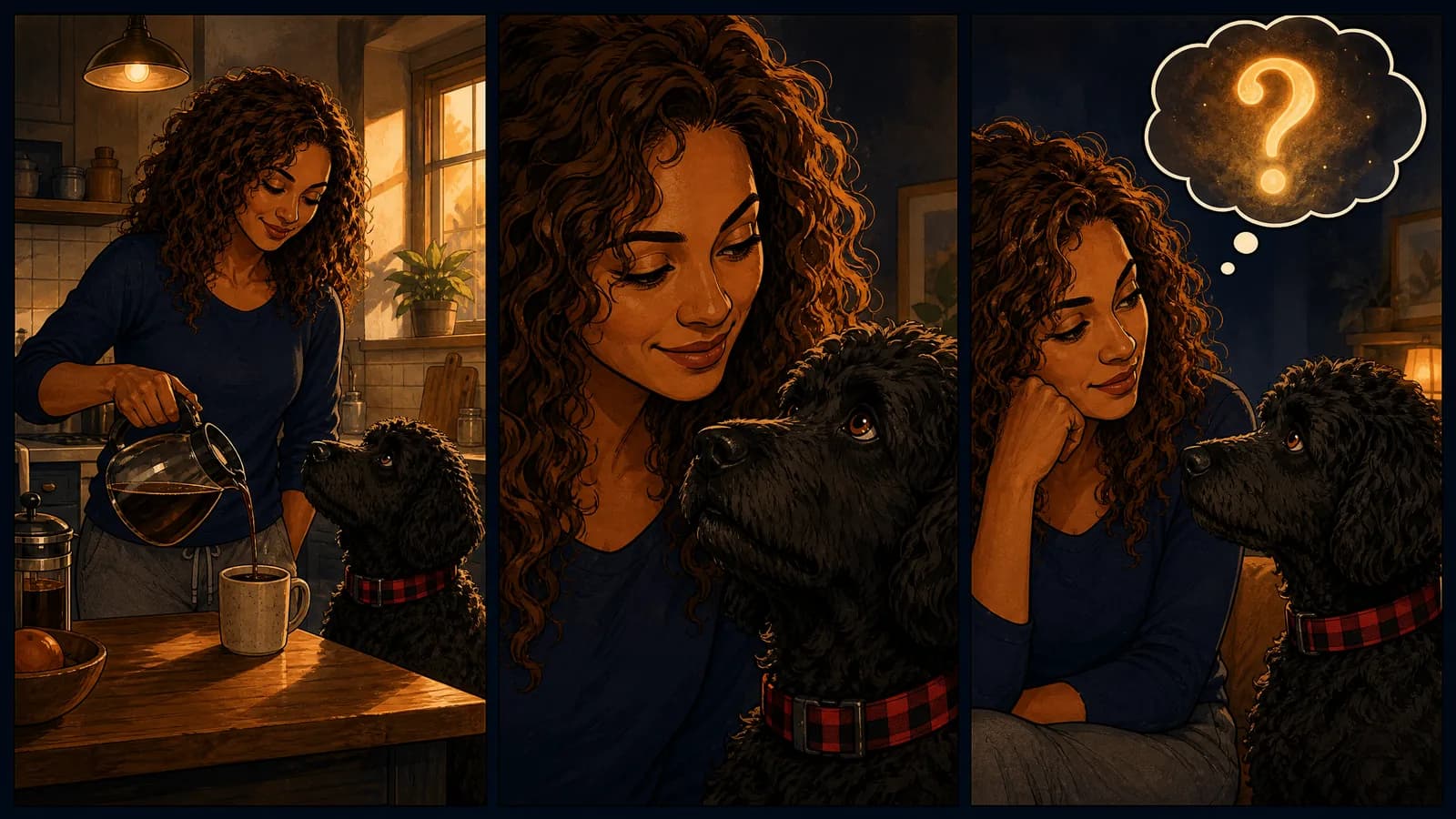
Three panels: a woman pours coffee in a sunlit kitchen while her black curly-coated dog watches; she smiles down at him close up; then she rests her chin on her hand looking at him, a question mark in a thought bubble above her.

This is George. He belongs to Samira, who co-founded this company and who has worked as a veterinary technician — so she knows more about animal health than most people ever will. And she still could not always tell what was wrong with her own dog. That gap is where OurPack started.

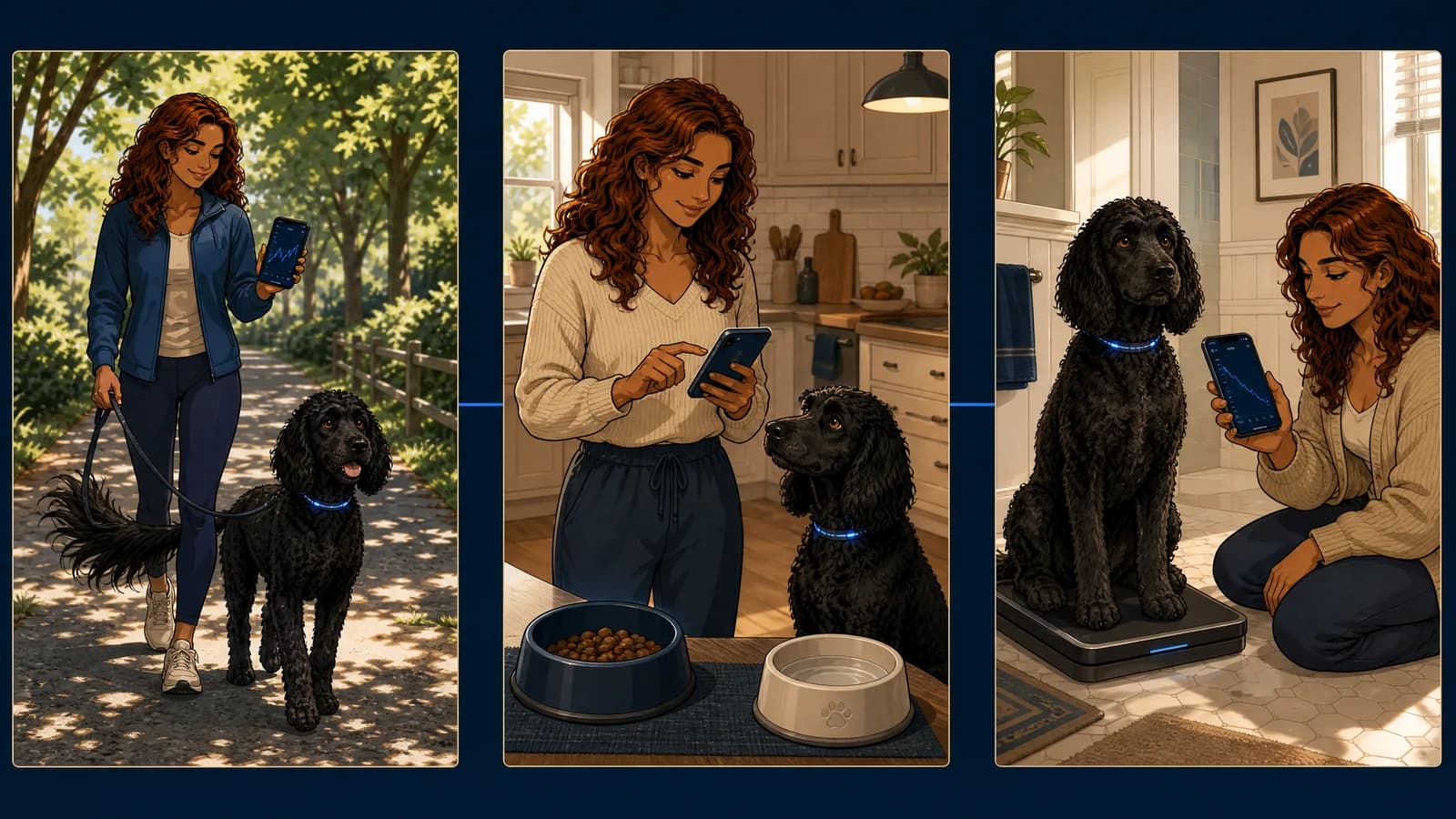
Three panels: walking the dog on a wooded path while holding a phone; checking the phone beside his food and water bowls; and the dog standing on floor scales as she reads the result.

Nothing dramatic happens in this picture. He goes out, he eats, he sleeps, he weighs what he weighs. You already notice most of it. You just have nowhere to put it, so it lives in your memory until the day someone asks and you cannot quite remember.

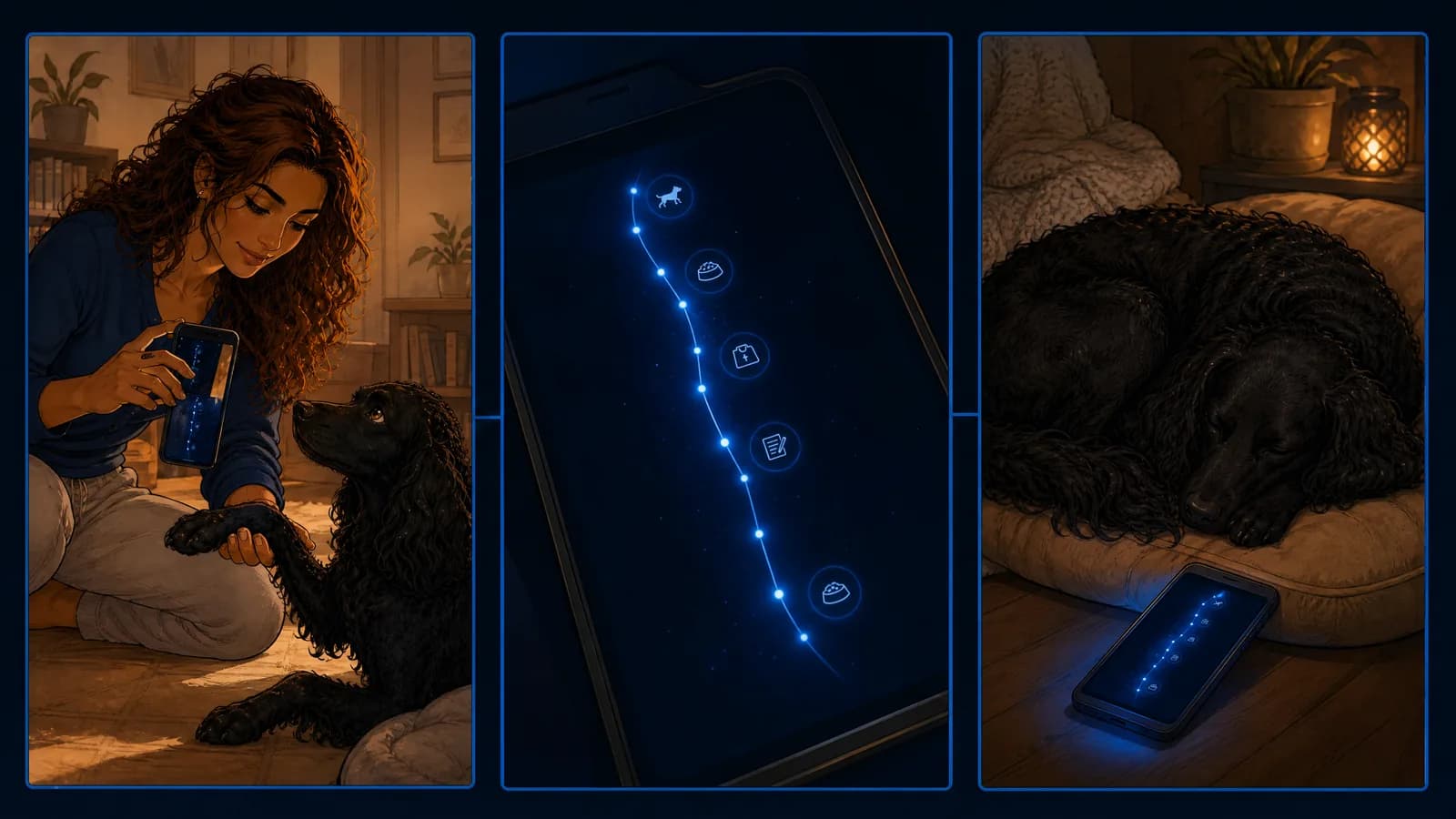
Three panels: the woman sits on the floor holding her phone and the dog's paw; a close-up of the phone showing a chain of glowing dots linking small icons; and the dog asleep on his bed at night with the phone glowing on the floor.

On its own, "drank a bit more today" means nothing at all. Six weeks of it means something. The whole idea of OurPack is that the small things stop being forgettable — they become a record that belongs to your pet and travels with him.
Chapter Two

The fifteen minutes that decide everything

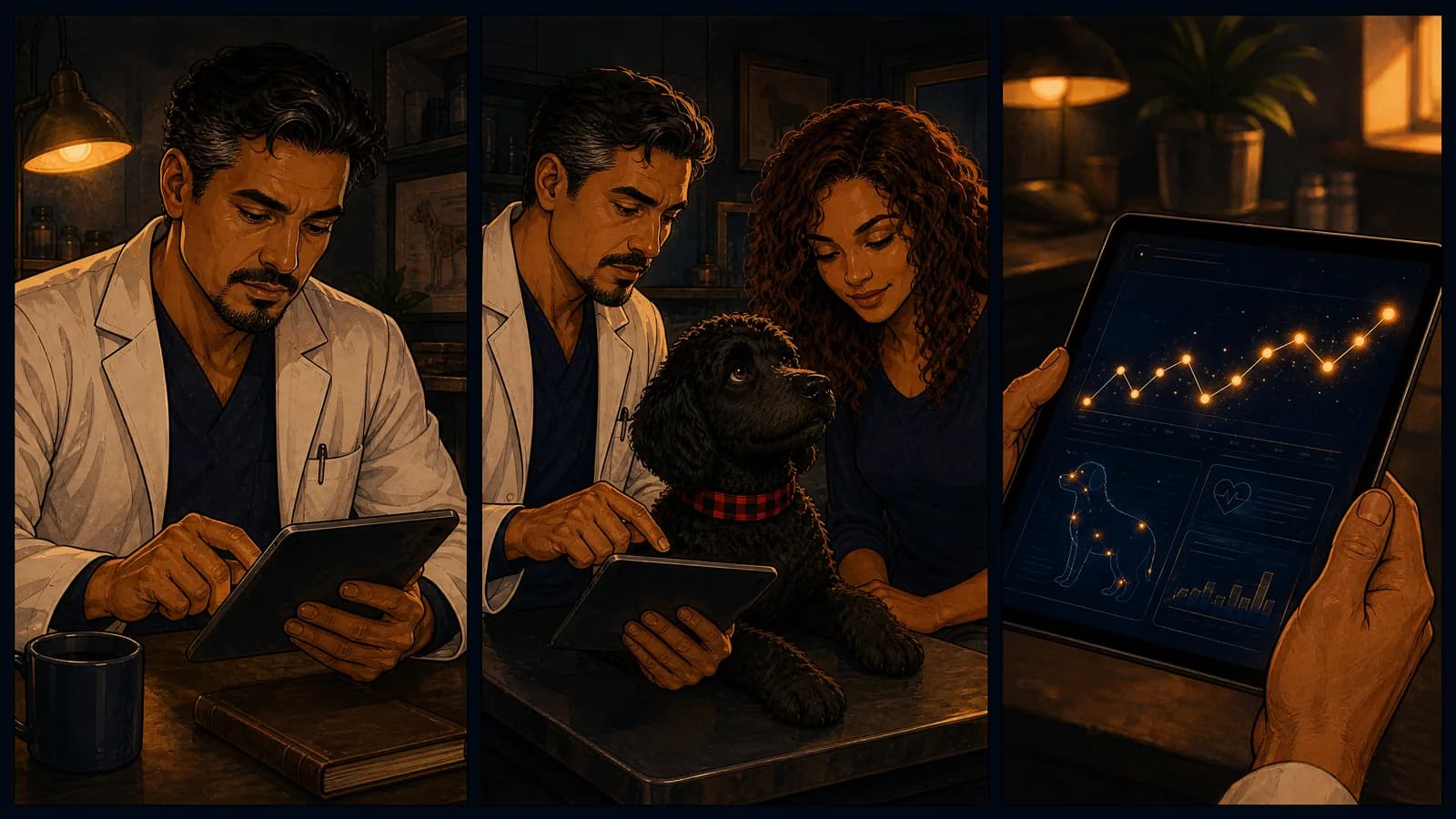
Three panels: a veterinarian reads a tablet at his desk; he points at it with the dog on the exam table and the owner beside him; and a close-up of the tablet showing a rising line of connected dots.

Your vet gets a few minutes, a few times a year, and has to work out what has changed since last time from whatever you can remember under pressure. Imagine they could open the whole year instead — the walks, the weight, the thing you meant to mention and forgot.

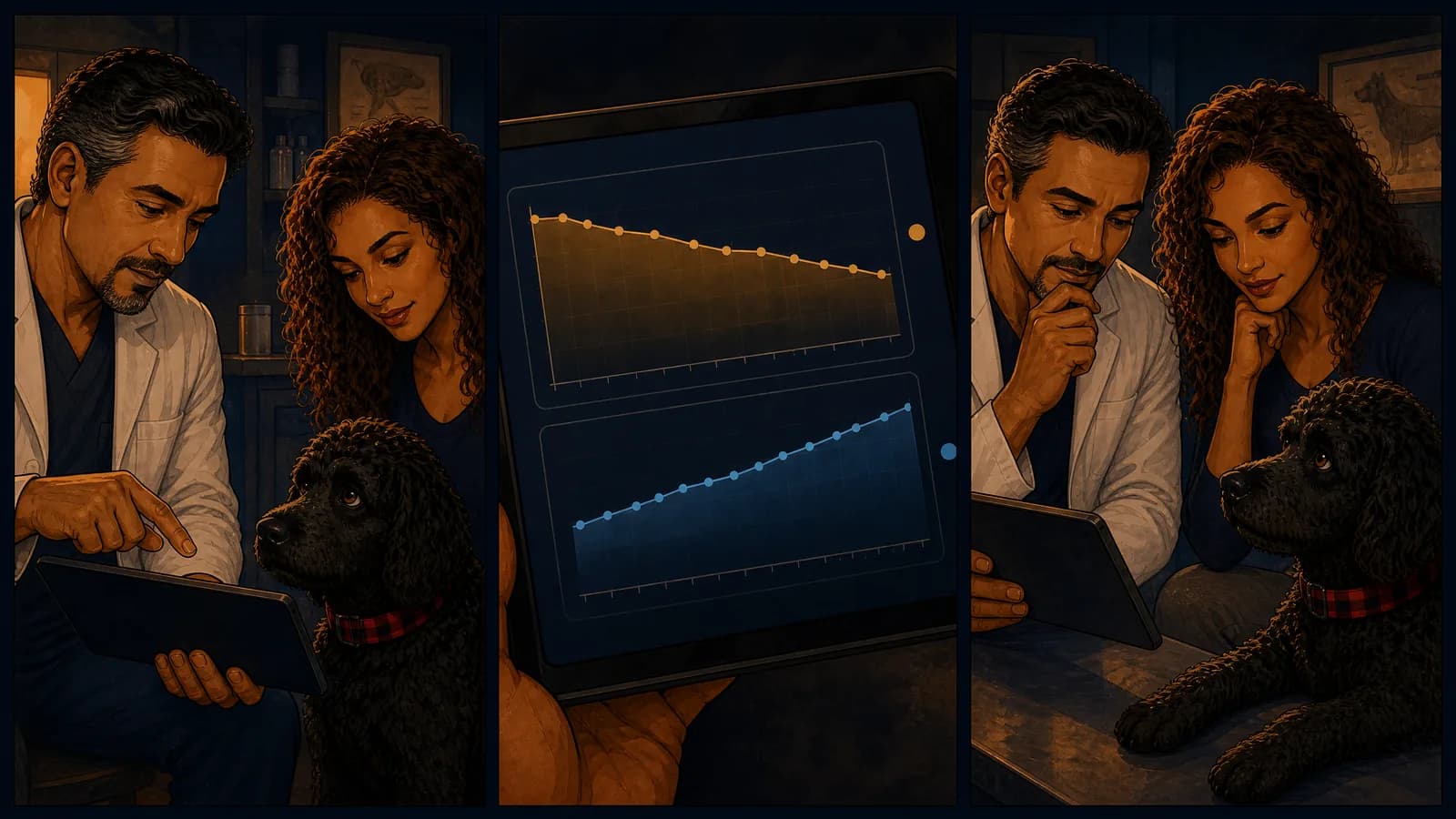
Three panels: the vet points at his tablet while the dog watches; a close-up of two charts, one sloping down and one rising; and the vet and owner both pausing, hands to their chins.

Slightly less active. Drinking slightly more. Over weeks, not days. No single appointment would catch that, and George certainly could not mention it. A line on a chart can. Not an alarm — just a thread worth pulling, early, while pulling it is still cheap.

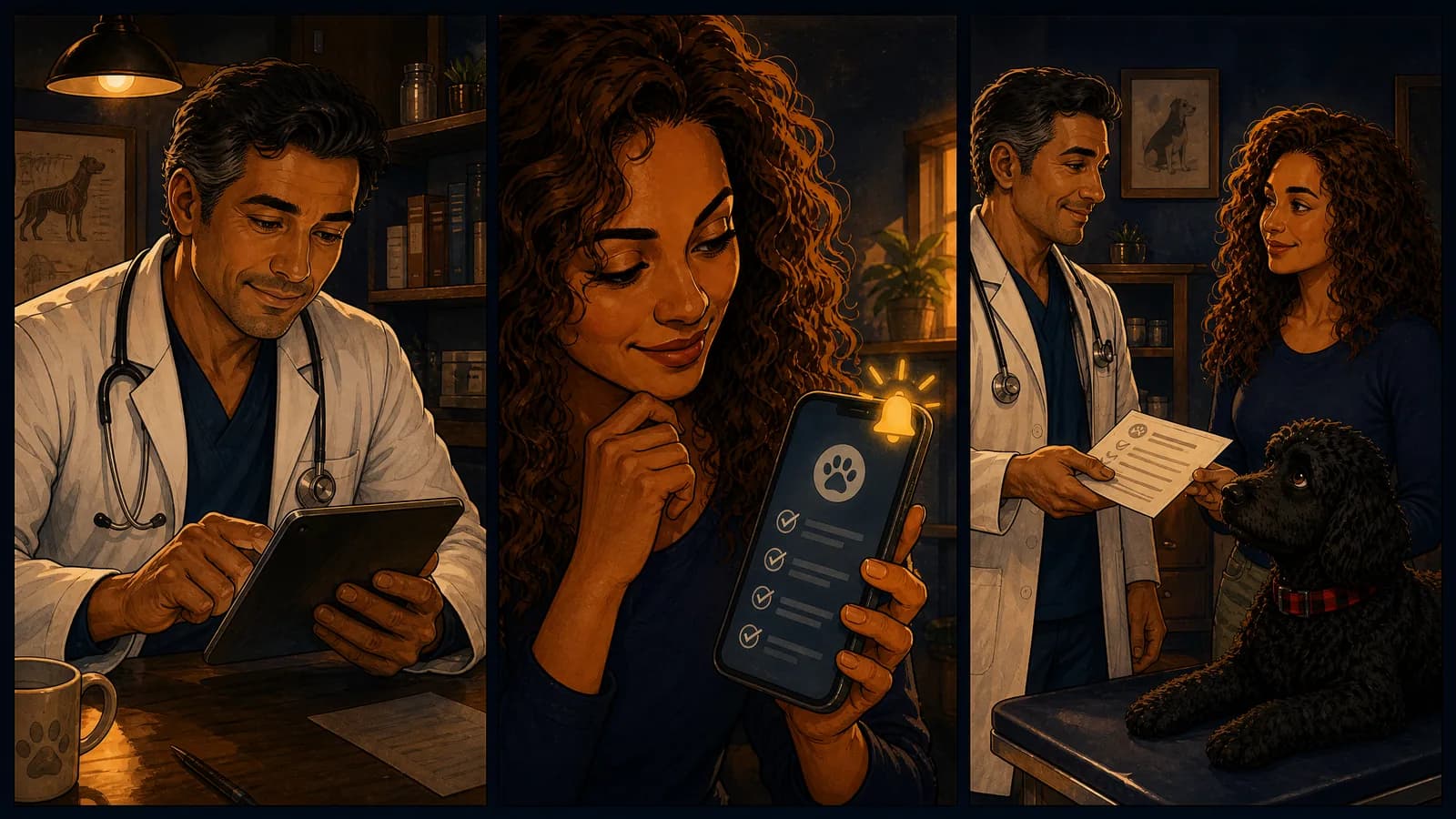
Three panels: the vet setting something up on a tablet; the owner smiling at a phone showing a checklist with a notification bell; and the vet handing her a printed plan across the exam table.

Every owner has been sent home with "keep an eye on him" and no idea what that means. Watch for what? For how long? Call when? Your vet can set exactly that — what to look for, how long to look, and when to pick up the phone — and it runs quietly in the background of a busy week.

Chapter Three

Keeping it honest at home

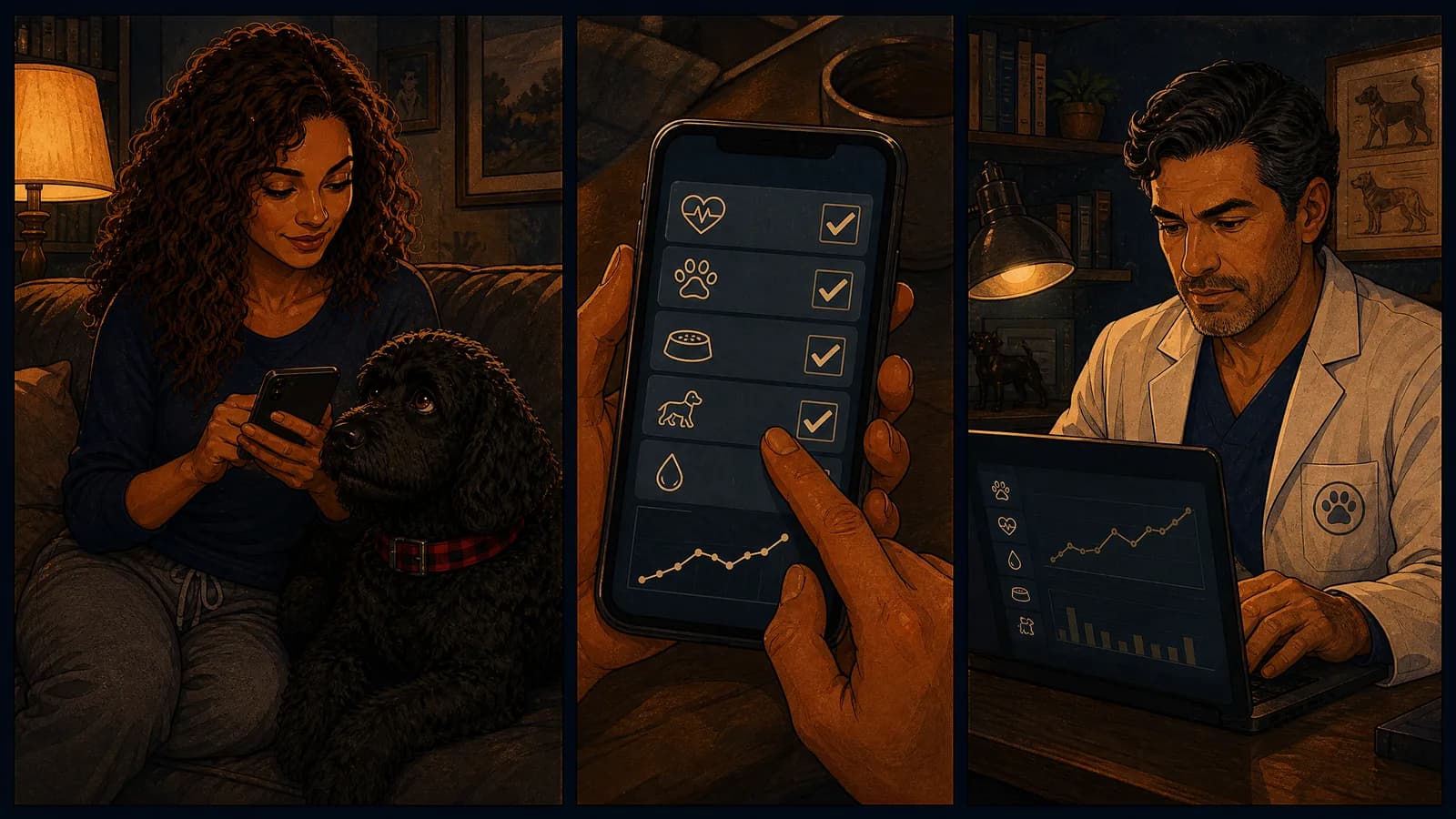
Three panels: the owner on the sofa with her phone and the dog beside her; a close-up of a checklist being ticked off; and the vet reviewing the same data on a laptop.

Home care plans do not fail because people do not care. They fail because Tuesday happens. A small prompt at the right moment is the difference between a plan that worked and a plan everyone meant to follow.

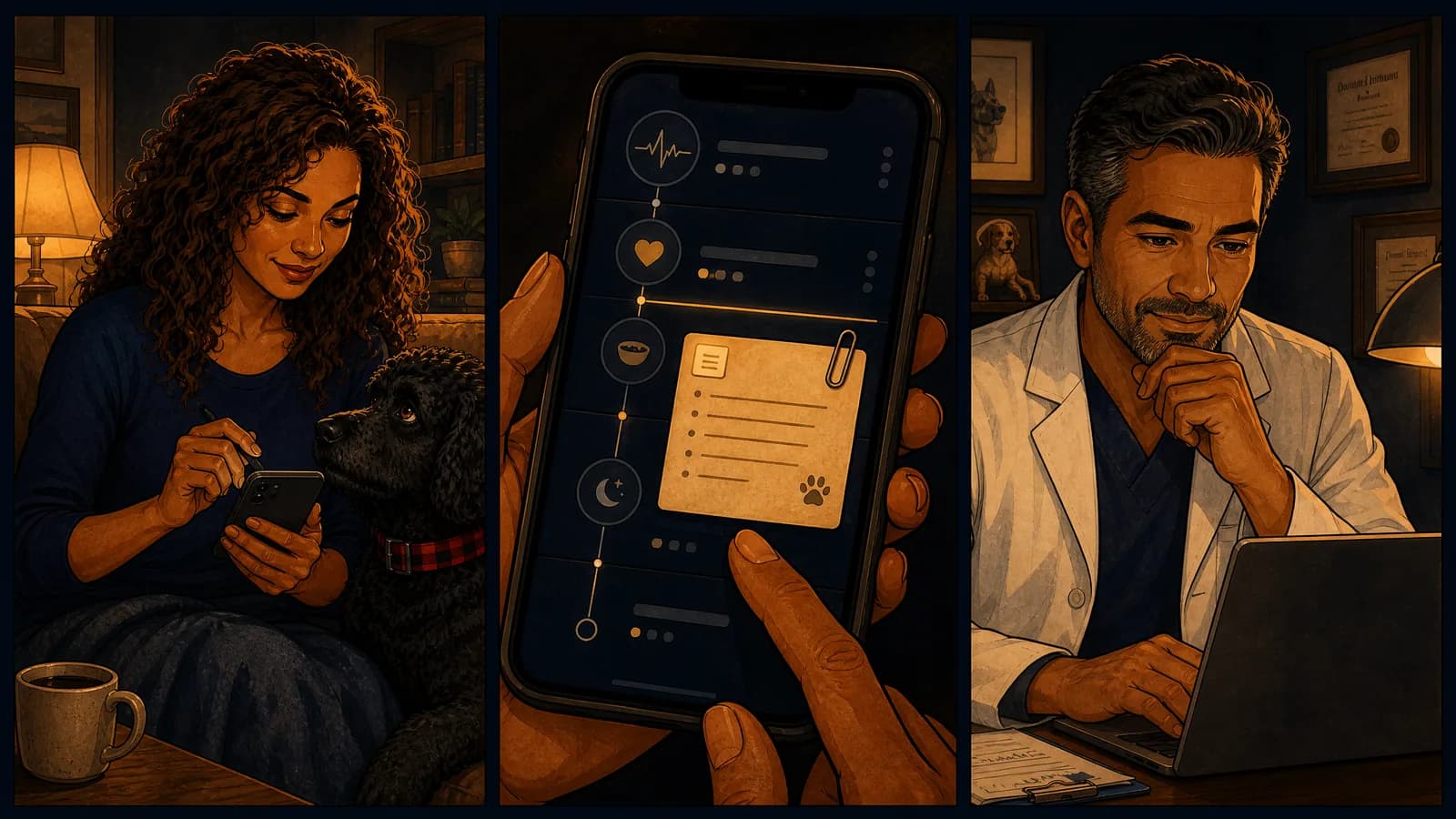
Three panels: the owner writing a note on her phone with the dog beside her; a close-up of a written note attached to the timeline; and the vet reading it later at his laptop.

And when a day gets away from you, that goes in too. It matters more than it sounds: a record that only contains the good days is not a record, it is a highlight reel. Your vet needs to know what actually happened.

Chapter Four

2 a.m.

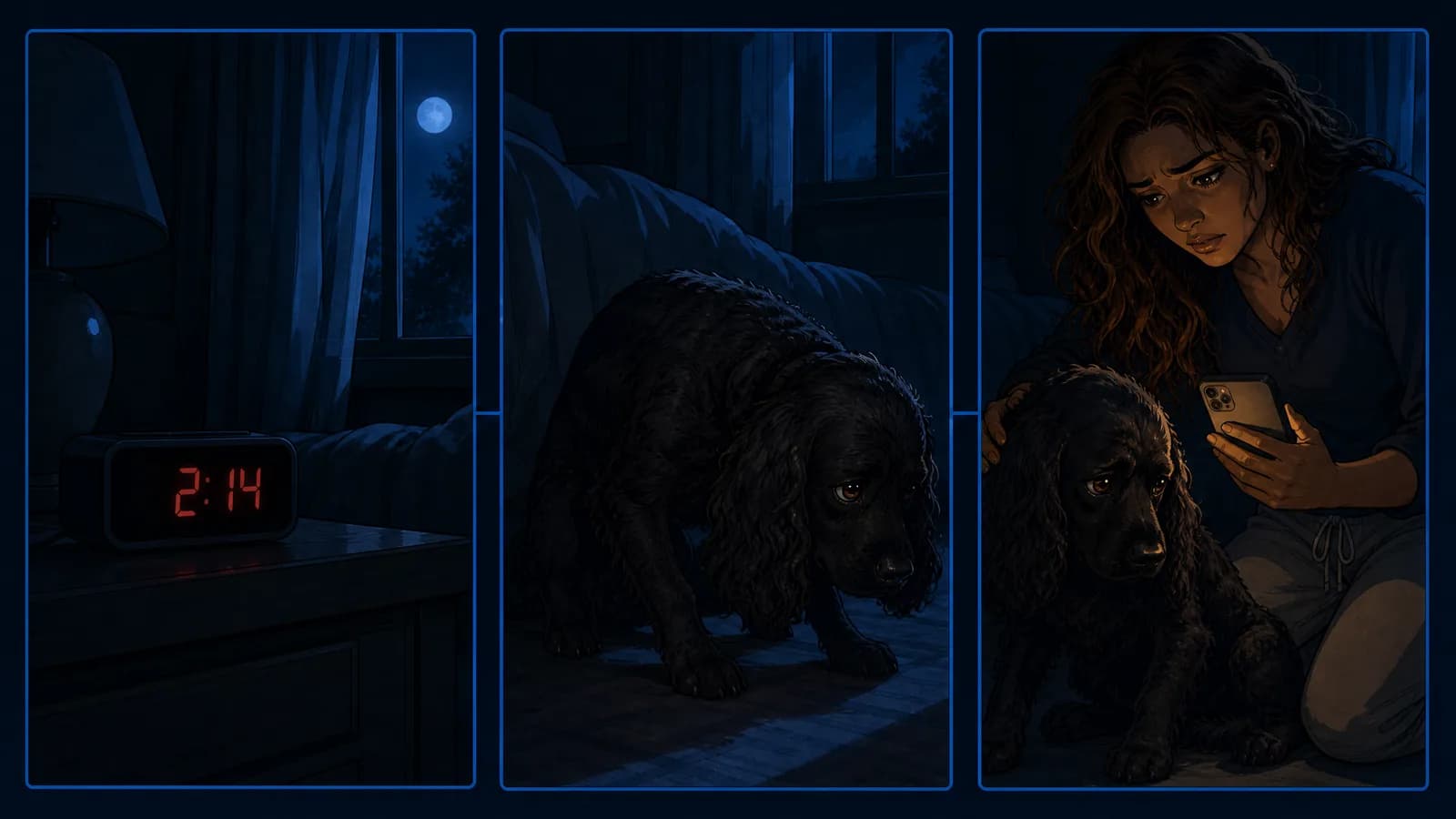
Three panels: a bedside clock reading 2:14 with a moon at the window; the dog standing in the dark with his head low; and the owner crouched beside him, worried, phone in hand.

Two in the morning. He is up, he is unsettled, and something is not right. You are standing in a dark kitchen in your dressing gown trying to decide something you have no way of deciding.

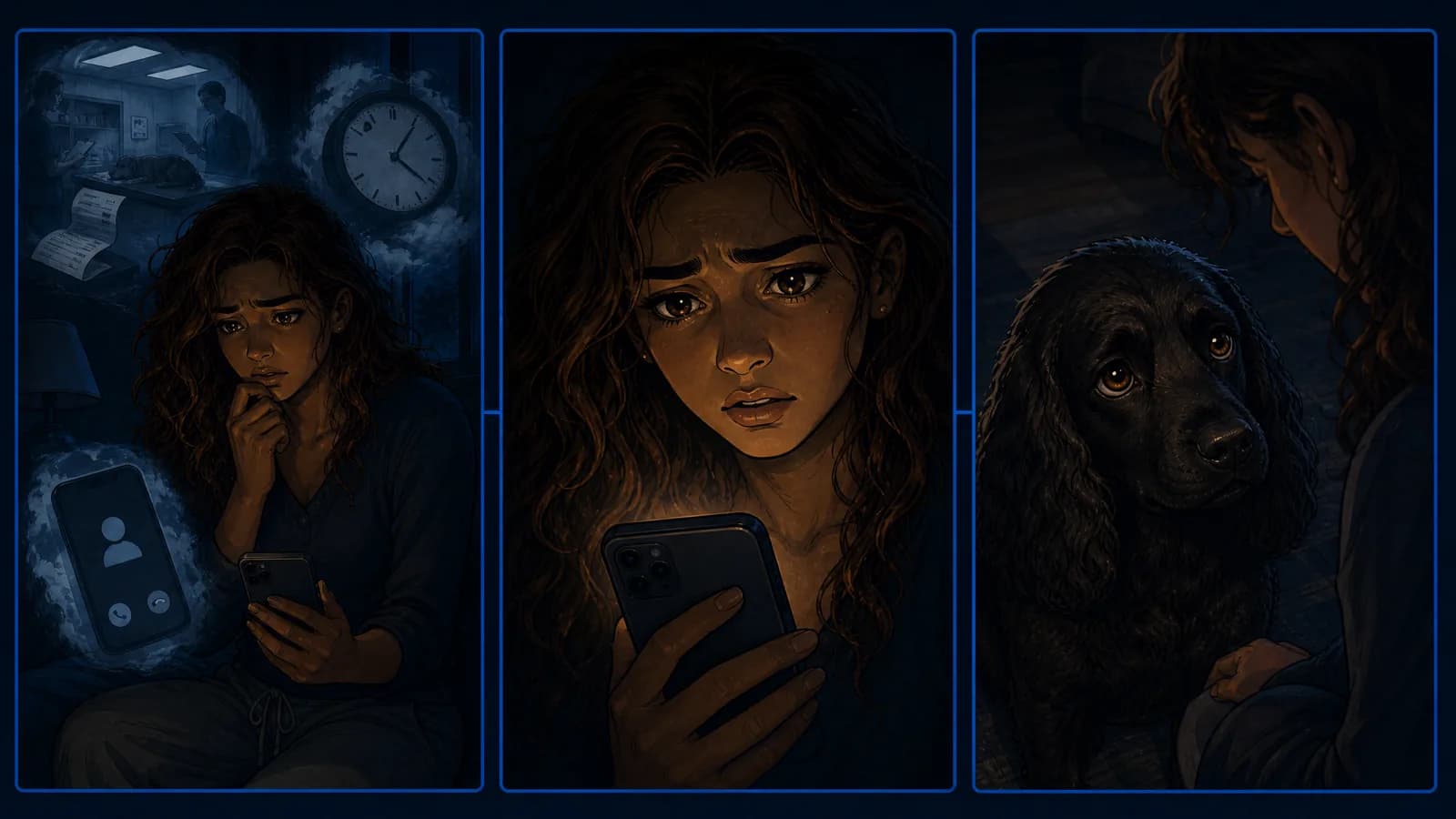
Three panels: the owner surrounded by imagined outcomes — a clinic, a clock, a phone call; a close-up of her frightened face lit by the screen; and the dog looking up at her.

Emergency room, and possibly a great deal of money for nothing? Or wait, and possibly miss something serious? There is no good way to make that call at 2 a.m. Samira is a veterinary technician and she froze here too — because when it is your own animal, knowing things is not the same as being able to judge.

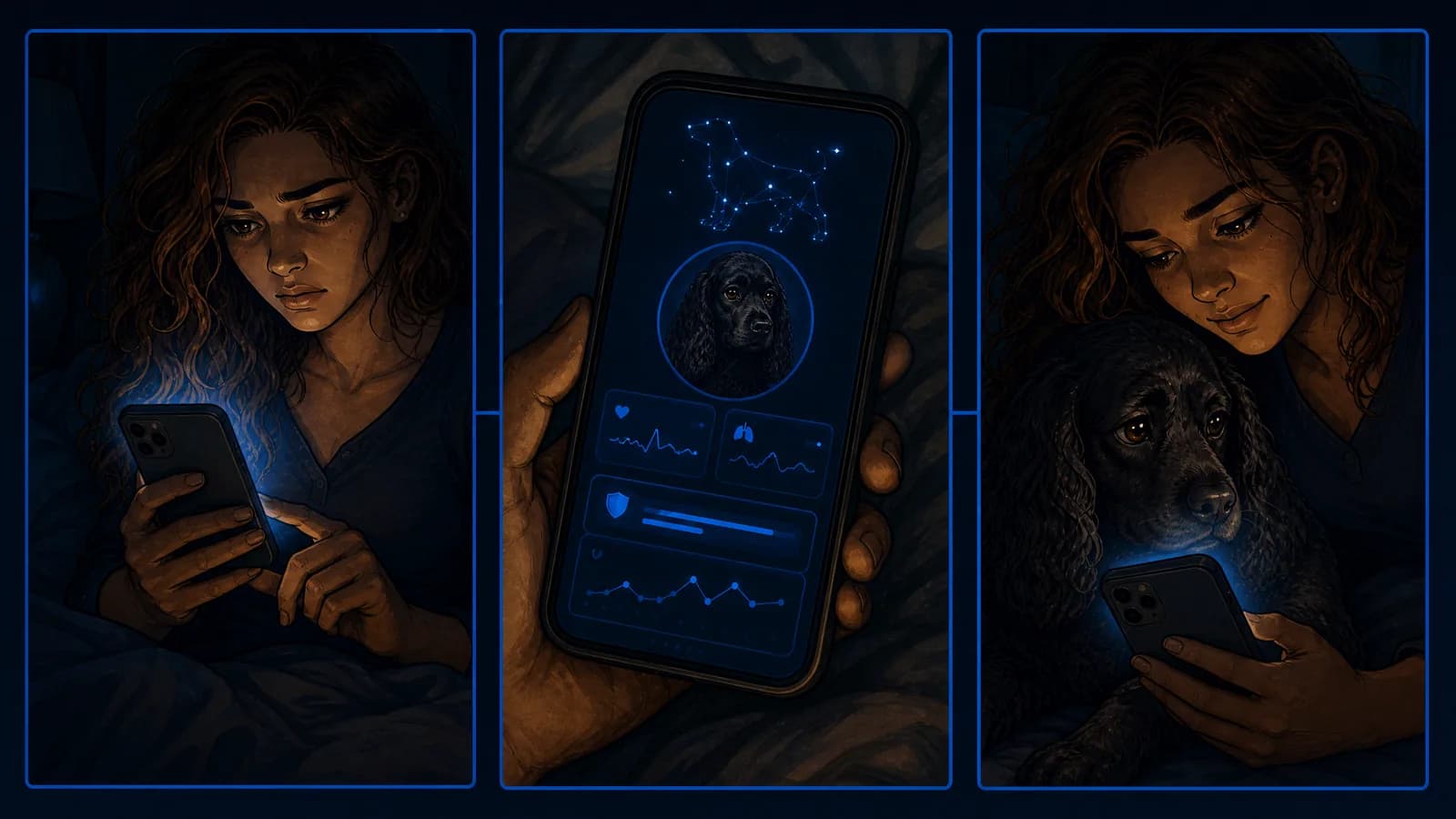
Three panels: the owner opening her phone in bed; a close-up of the screen showing the dog's profile and his readings; and the two of them lying together, calmer.

This is the moment the record earns its keep. You are not typing your dog's life story into a box at 2 a.m. It already knows his normal, his week, and what your vet asked you to watch for. For once, something in the room has the full picture.

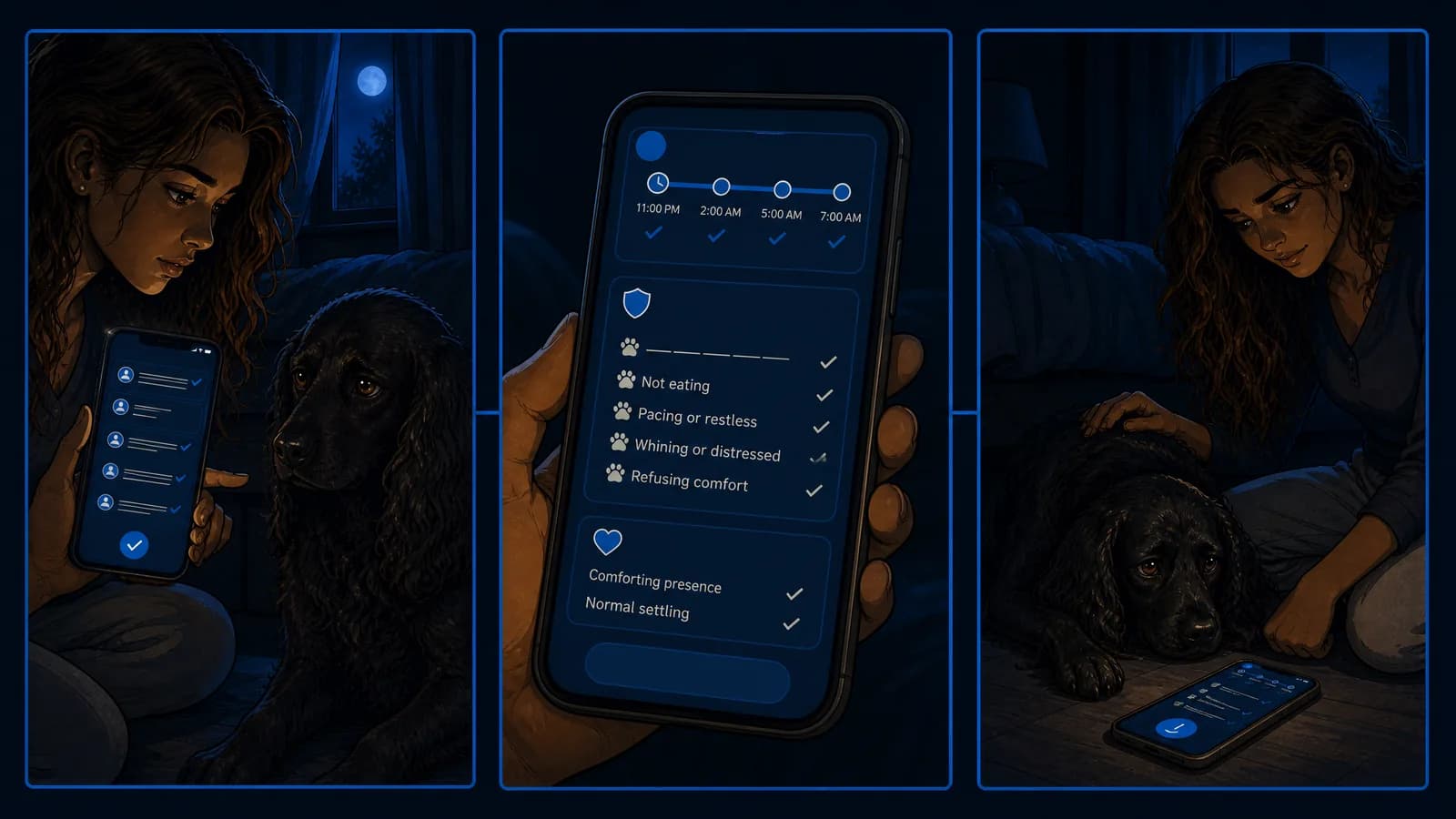
Three panels: the owner showing the dog a checklist on her phone; a close-up of a monitoring timeline and a list of warning signs; and the dog settling while she strokes him.

What you get is not a diagnosis, and it is never "you are fine, go back to bed". It walks you through what to check, tells you plainly which signs mean go now, and if tonight is not one of those nights, sets a window and the exact triggers that would change the answer. The question is always how fast to see a vet — never whether.

Chapter Five

The right care, right-sized

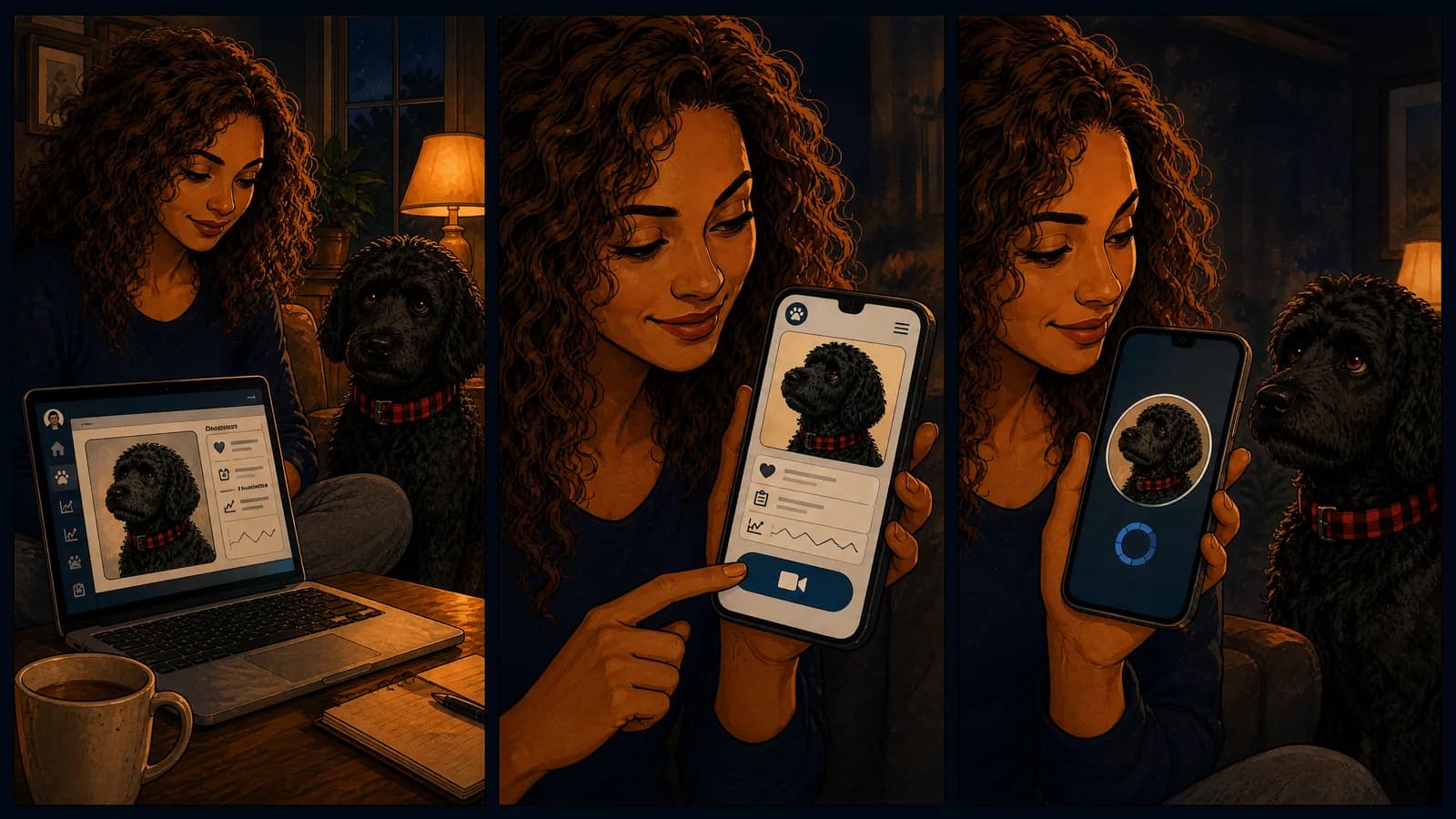
Three panels: the owner at her laptop with the dog's record open; a close-up of her tapping a video-call button; and the call connecting.

By morning he is steady, but "steady" is not "fine", and the window says do not sit on this. That is the whole point: most nights are neither an emergency nor nothing, and until now there was no middle option.

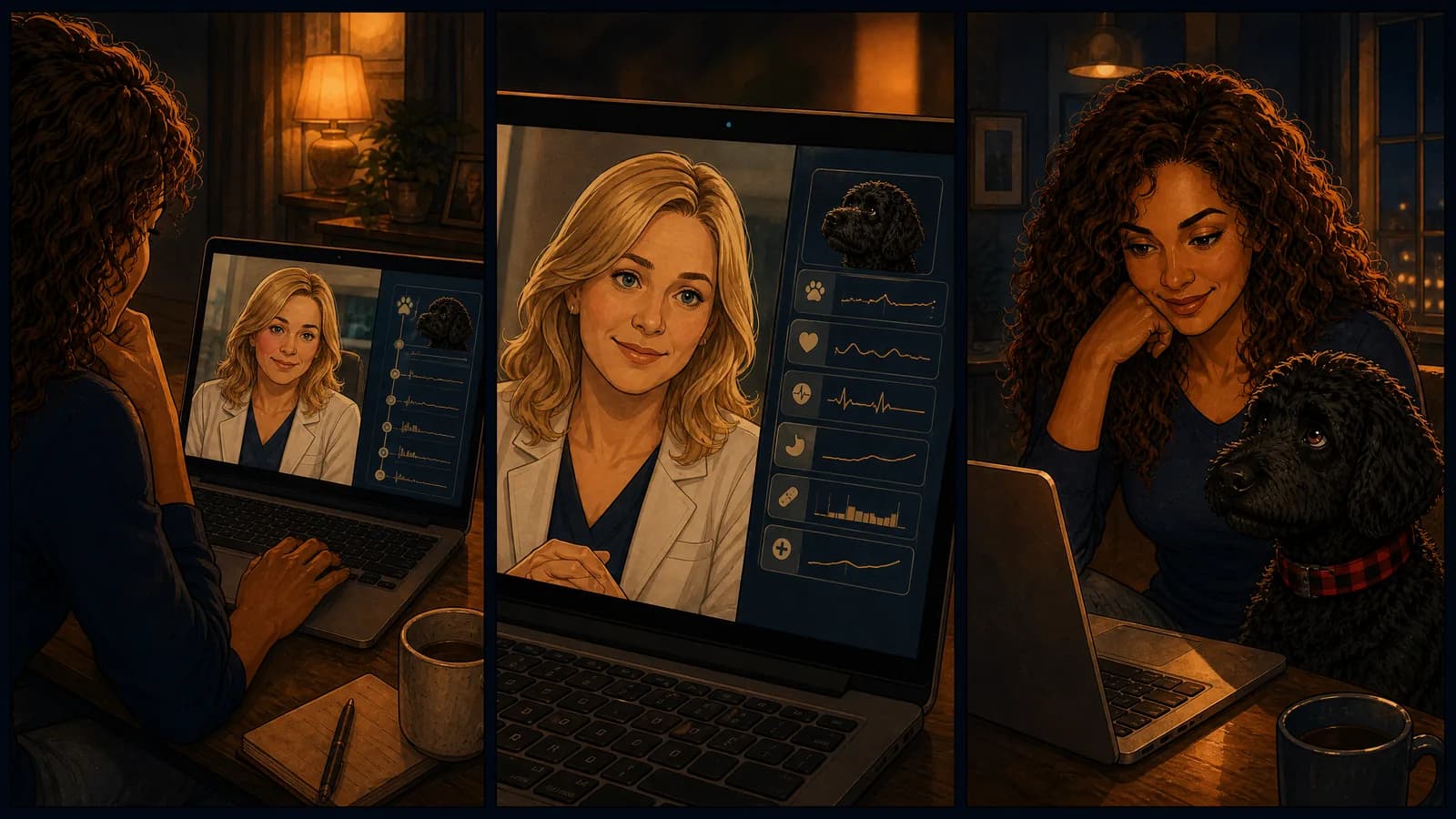
Three panels: the owner at a laptop talking to a veterinarian on screen; a close-up of the call with the dog's charts open beside it; and the owner smiling with the dog beside her.

A vet, on a screen, at eight in the morning — with George's history already in front of them instead of ten minutes of catching up. Whether that call happens through us or somewhere else matters far less than whether the vet on it knows your dog.

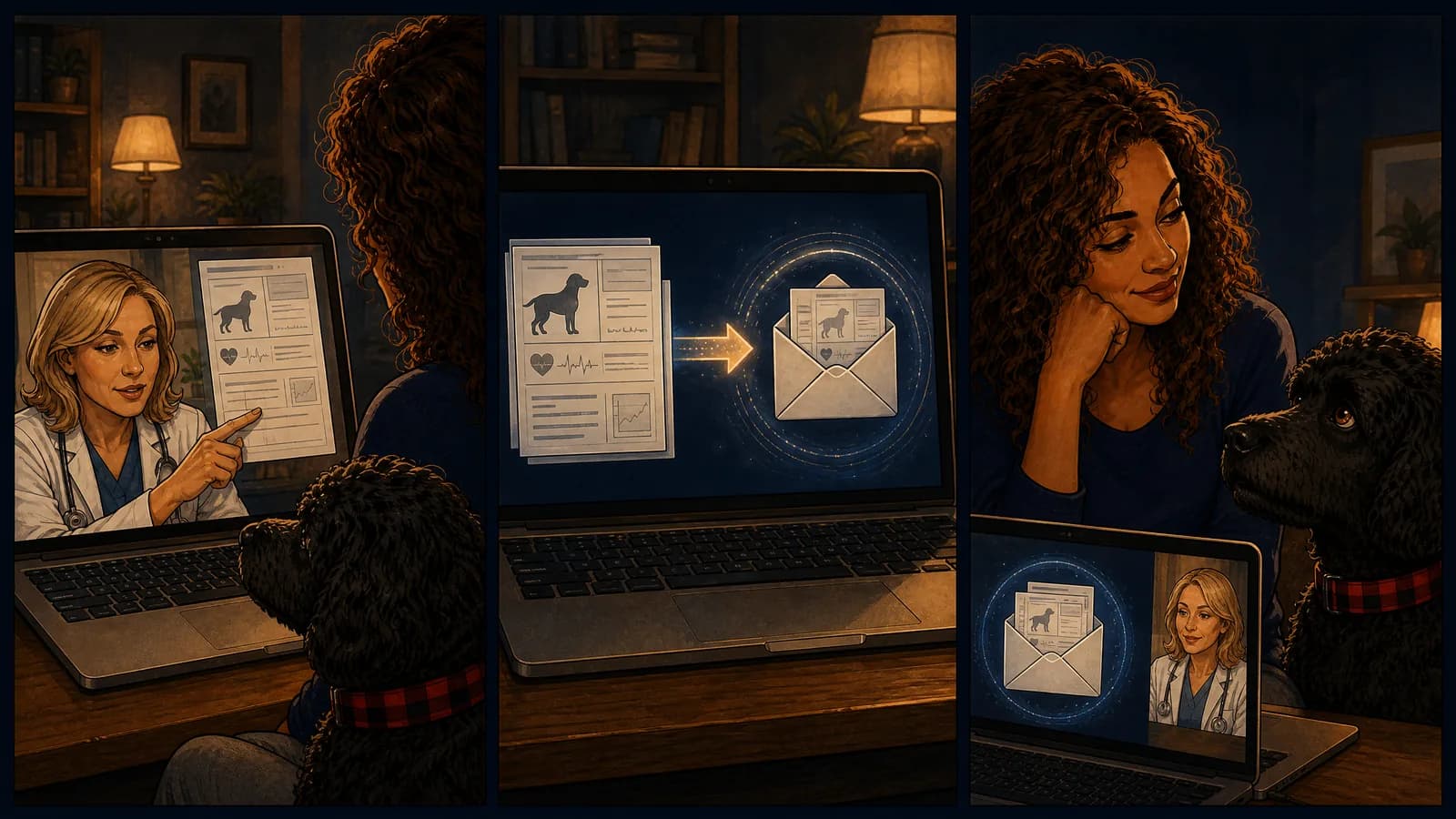
Three panels: the veterinarian pointing at a referral document on the call; a close-up of the papers sliding into an envelope; and the owner with the dog as it is sent.

If he needs a specialist, he does not arrive as a stranger carrying a photocopy. The whole story goes with him — because it was his to begin with.

Chapter Six

The stranger who already knows him

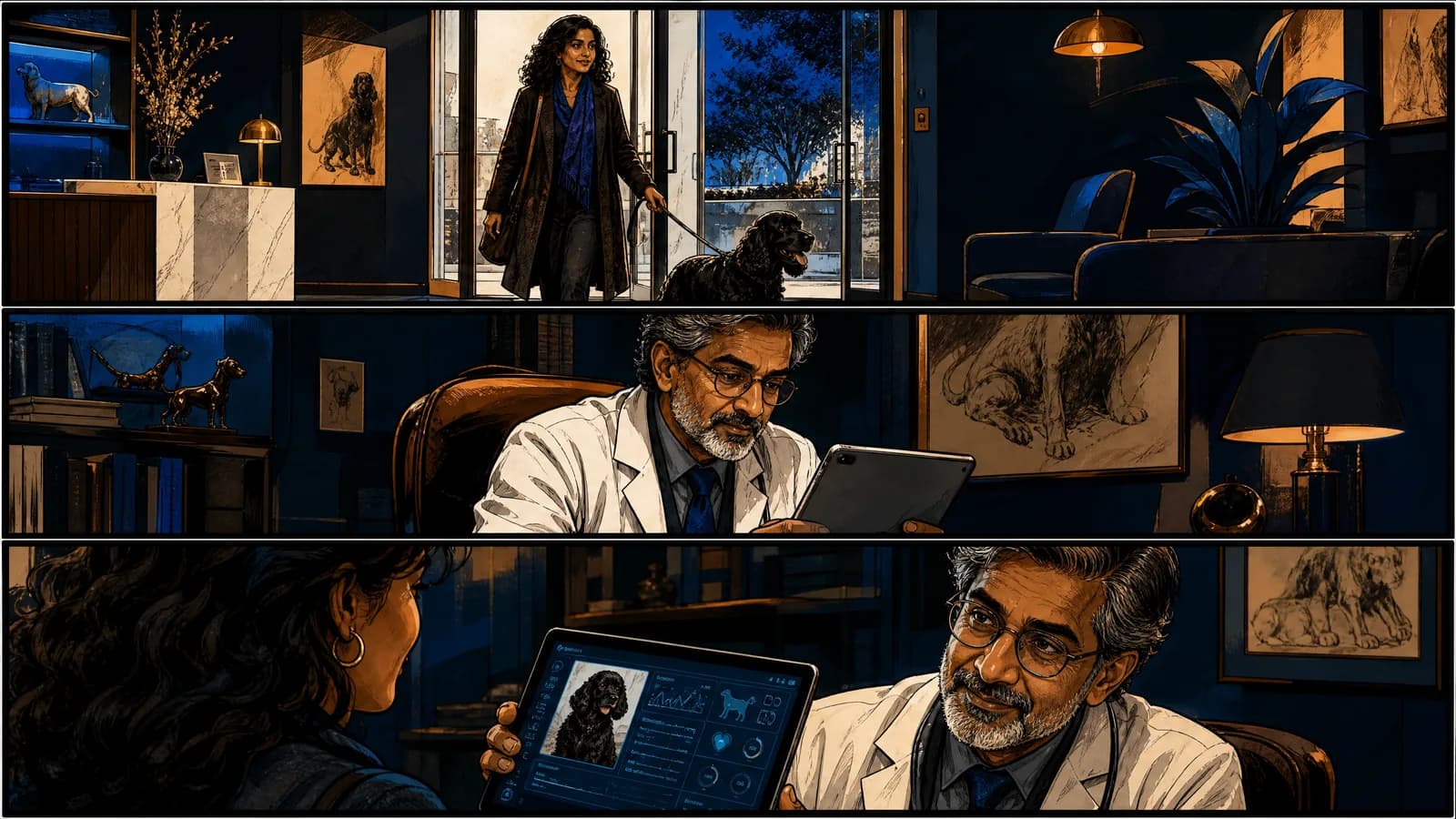
Three wide panels: the owner arriving at an unfamiliar specialist clinic with the dog on a lead; the specialist reading a tablet in his consulting room; and him showing her the dog's record.

A new clinic, a new person, a dog who has never been here. Normally this is where you start again — repeating the story from memory while someone types, and re-running tests that were already run last month.

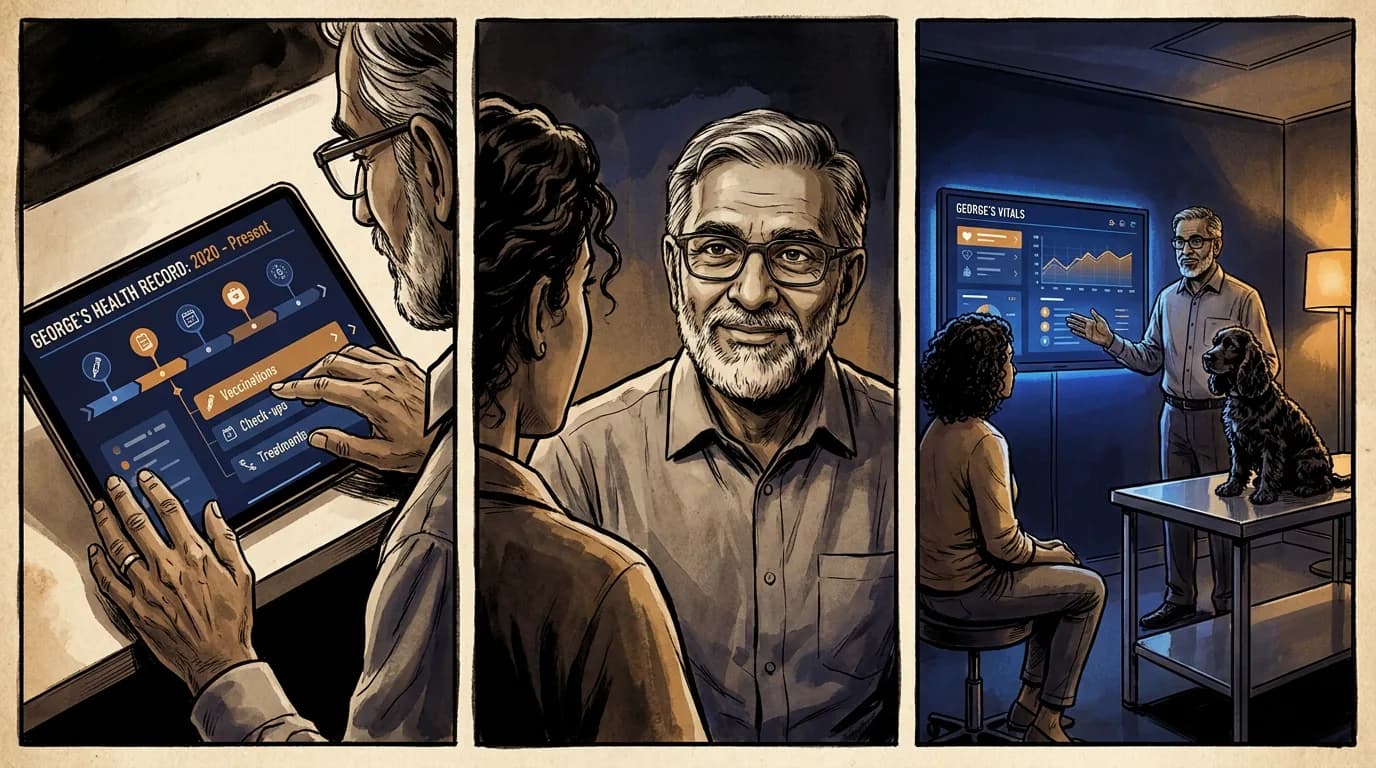
Three panels: hands scrolling a health record spanning years; the specialist listening to the owner; and him presenting the dog's vitals on a wall screen while the dog sits on the table.

Except he is not a stranger to the record. The year, the plan, that bad night, what the last vet said — all of it, already open. And you are not the one who has to remember it correctly while worried.

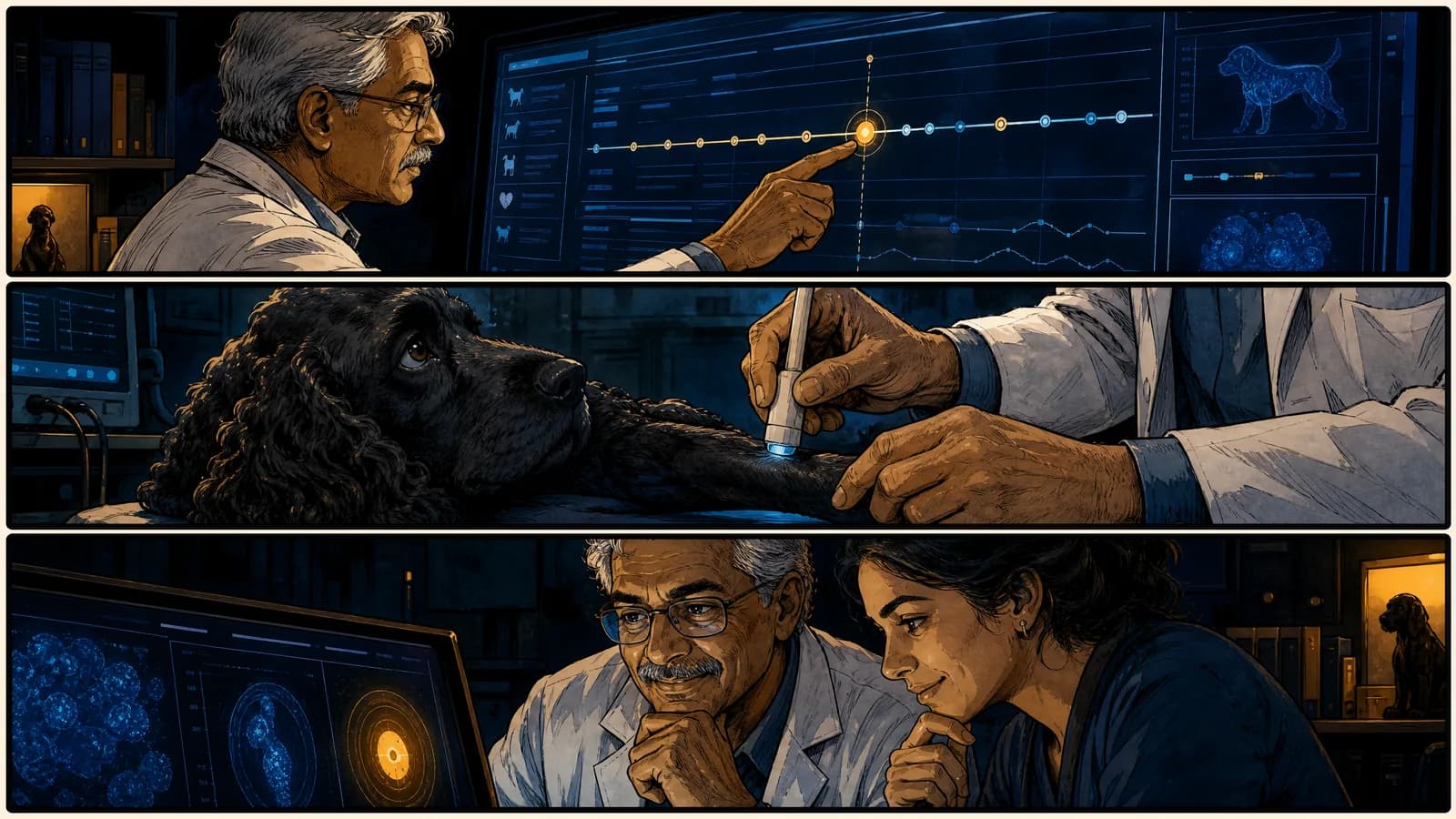
Three wide panels: the specialist marking one point on a long timeline; a single sample being taken from the dog's foreleg; and the specialist and owner reading the result together.

Knowing the whole story means starting three steps in. Not a battery of tests to rule out what was already ruled out — the right test, first. That is faster, it costs less, and it is a great deal less frightening.

Chapter Seven

Why we built it

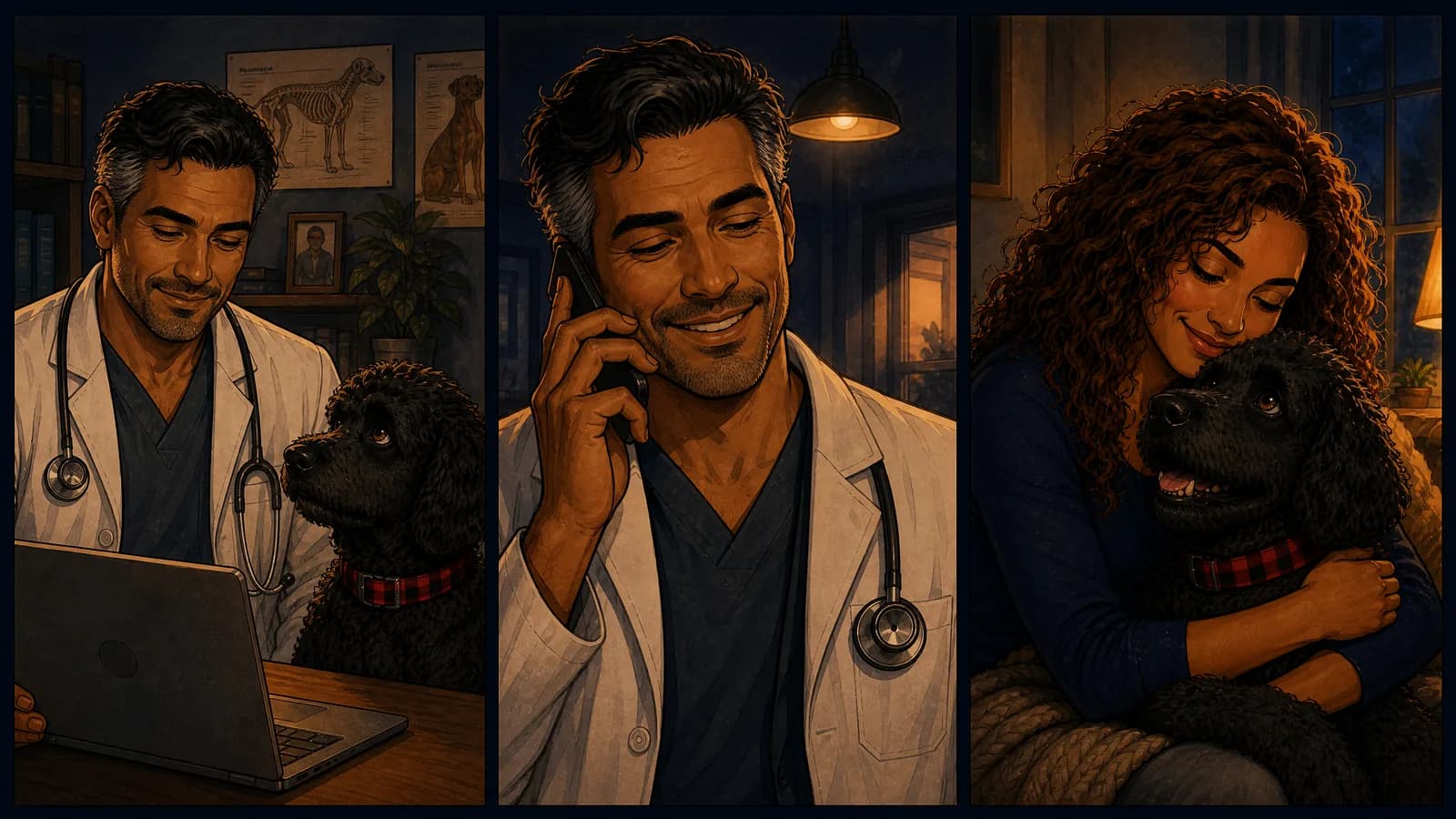
Three panels: the vet reading good news at his laptop with the dog beside him; the vet smiling on the phone; and the owner holding the dog close, both happy.

Because the dots were joined — a quiet morning, a routine visit, a bad night, a specialist — the answer came early, while early still mattered. That is what "caught in time" actually looks like from the inside.

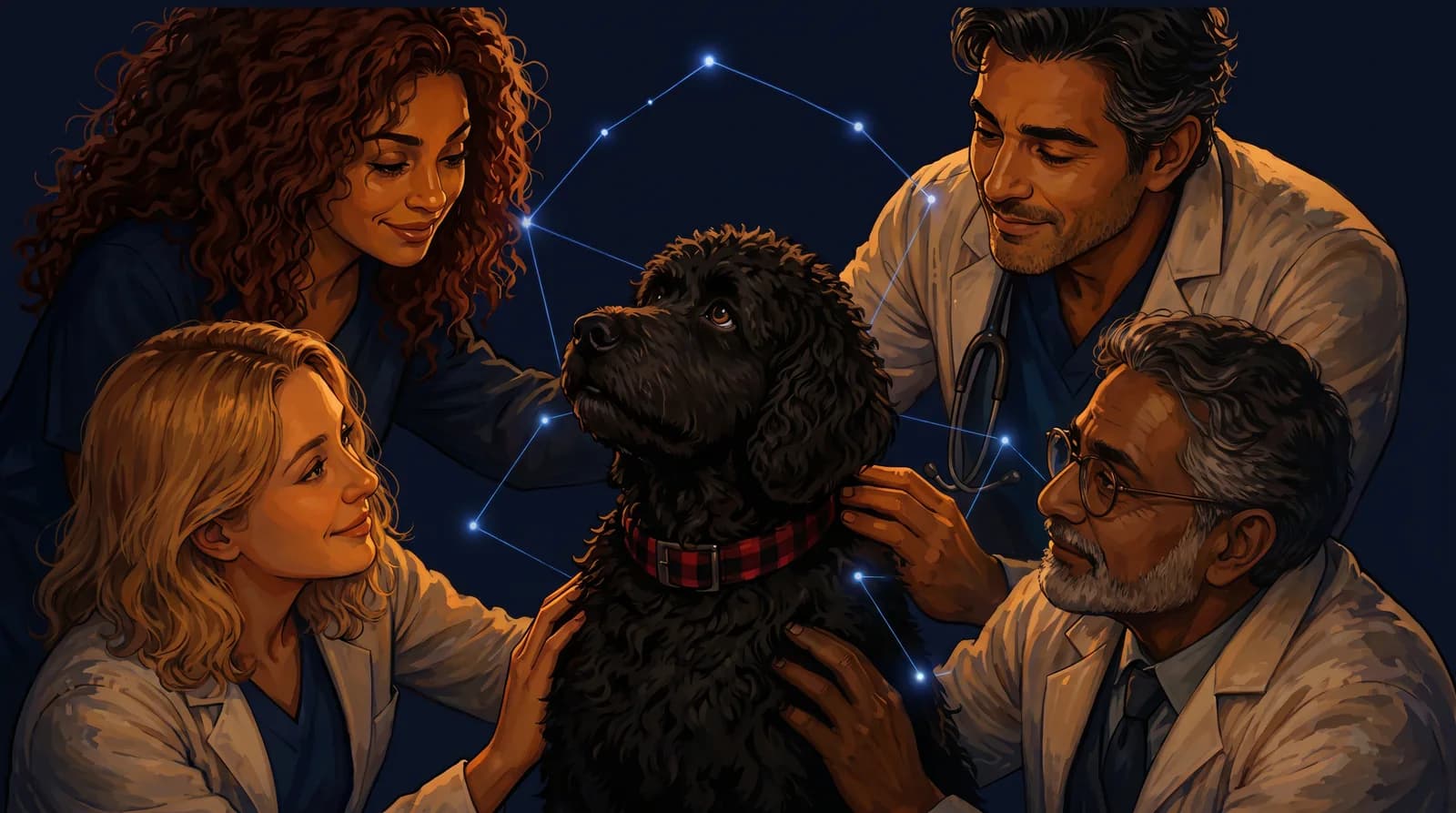
The owner, two veterinarians and a specialist gathered around the dog, joined by faint lines of light.

Here is the whole idea in one picture. Four people who would normally never speak, none of them starting from nothing. What connects them is not an appointment booked through us — the care still happens wherever you choose. It is the record, which is your pet's, and which carries what each of them learned to all the others.

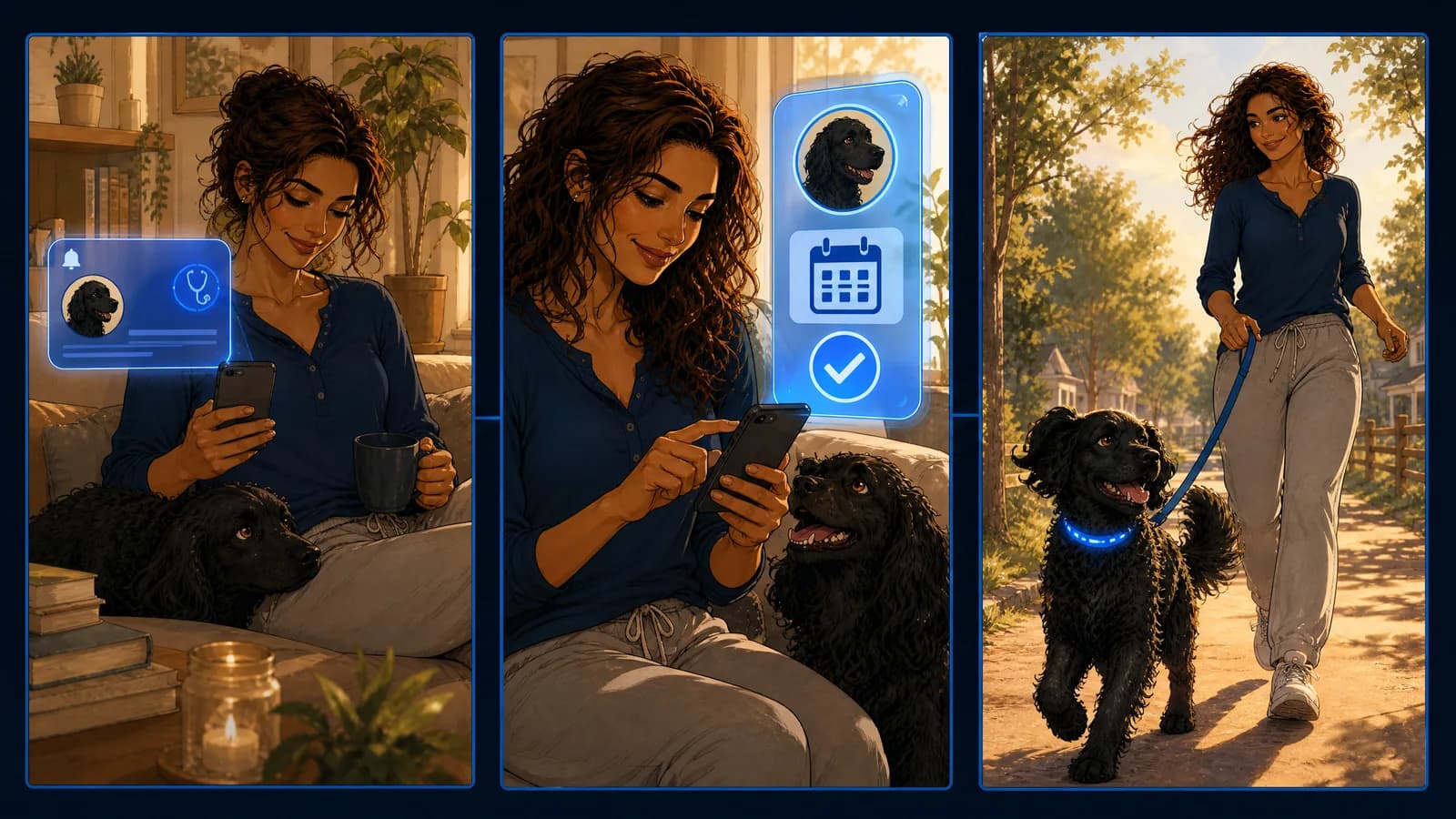
Three panels: the owner at home with a reminder on her phone and the dog on her lap; booking the next appointment; and the two of them out walking in bright daylight.

And it does not stop when the scare passes. It keeps nudging the boring, unglamorous, genuinely important things — the preventive care that stops the next bad night happening at all. George still cannot tell you what is wrong. But his health finally has a voice.

Every part of that story happened to somebody. The care itself still happens where you choose it — your own vet, your own clinic. What we carry is the record, so nobody your pet sees ever has to start from nothing again.